Your body clock and your job


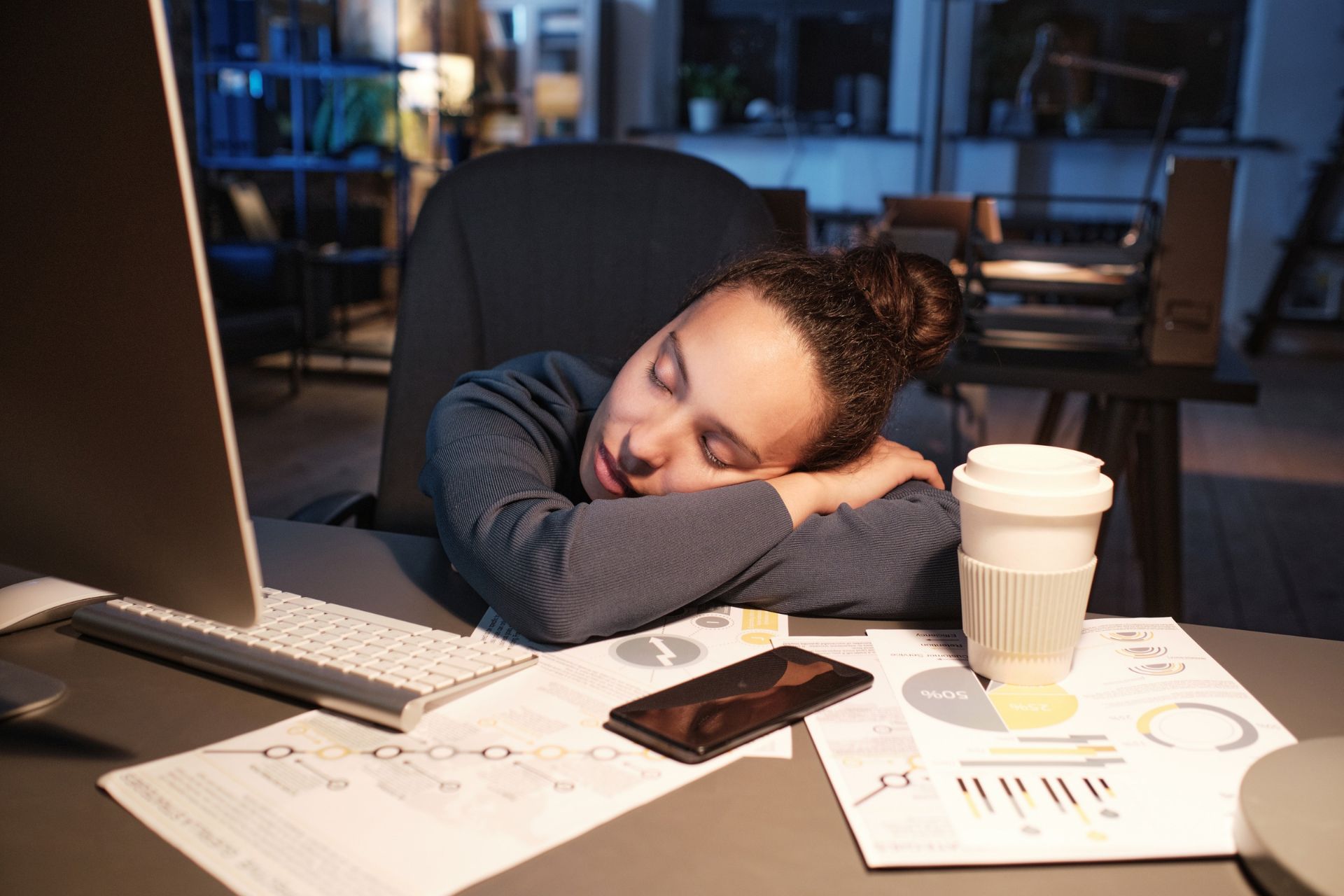
Your energy rises and falls on a 24-hour cycle, and shift work fights it. Here's what the research says, and what workers and employers can do about it.
Everyone has a low point in the day. For some people it's straight after lunch, and for others it's the first hour of the morning. That pattern isn't laziness. It's your circadian rhythm.
The US National Institute of General Medical Sciences describes circadian rhythms as "physical, mental, and behavioral changes that follow a 24-hour cycle".
A master clock in the brain uses light reaching the eyes to set when you release melatonin, the hormone that makes you sleepy.
When work pulls you against that clock, through night shifts, early starts or jet lag, the result can be drowsiness, poor coordination and trouble focusing.
Larks and owls
Not everyone's clock runs on the same schedule. Some people are naturally early risers and others peak late.
A Finnish study published in 2021 followed nearly 5,900 people from the Northern Finland Birth Cohort into middle age. The University of Oulu reported that night owls may be twice as likely as morning larks to have poorer ability to work.
The study was observational, so it doesn't prove the body clock causes the gap. One likely factor is that most jobs still start at 8 or 9am.
If you have any say over your day, put the demanding work where your energy is. Owls can save routine admin for the morning and do problem-solving later. Larks can do the opposite.
Shift work
Night work is where the clash is biggest. In 2019 the International Agency for Research on Cancer classified night shift work as "probably carcinogenic to humans", based on limited evidence in people.
That's a rating of how strong the evidence is, not how big the risk is, but it's a reason to take long-term night work seriously.
Injury risk is more immediate. A New Zealand study of about 15,000 workers in the NZ Blood Donors' Health Study found people on rotating shifts that included nights had around twice the injury risk of those on regular day hours.
WorkSafe's guidance for workers says to talk to your manager early if a roster isn't working. Naps can help, but they shouldn't routinely be used to stretch shifts.
Healthify NZ puts recovery simply. "What you take out of the sleep bank, you need to put back in."
On shift, Healthify suggests bright lights, moving around, cool air, talking with colleagues and switching to more stimulating tasks when you're flagging.
What employers can do
Employers have a duty under the Health and Safety at Work Act to manage fatigue so far as is reasonably practicable. WorkSafe has guidance on shift work risks covering roster design, breaks and the order of shift rotations.
Workers can also ask for change. Under Part 6AA of the Employment Relations Act, any employee can request flexible working, including different hours. The request must be in writing.
The employer has to reply in writing no later than a month after the request, and can refuse only on eight set business grounds, such as cost or being unable to reorganise work among other staff.
A request that starts from "I do my best work between 10 and 6" is a reasonable conversation to have. Your body clock isn't going to adjust to the job, so the job may need to adjust a little.